


Performance: Kyoko Tabe, piano
These two pieces were written for and dedicated to pianist Kyoko Tabe, who can be heard playing in the video above. Yoshimatsu makes multiple references to her birthday throughout, including the time signatures in many sections spelling out Kyoko’s birth date: 1967-3-26, or March 26, 1967. A blissful rendition of the famous Happy Birthday theme can also be heard at the end of the Second Romance, marking 5:54.
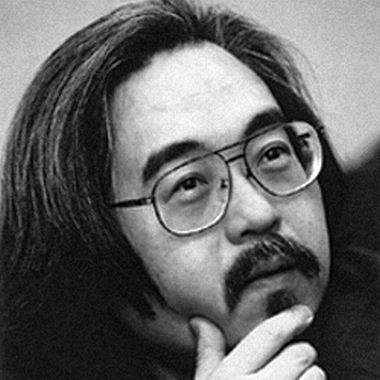
This paper by Li Xin details Takashi Yoshimatsu’s background and accomplishments:
“Takashi Yoshimatsu, born in Shibuya, Tokyo, Japan in 1953, is regarded as one of the
representative composers of Japanese contemporary music. However, he was not a music
major himself. When he was studying in the engineering department of Keio university,
he changed his goal to be a symphony composer because of his love for classical music.
Having briefly studied under Teizo Matsumura, his debuted piano solo “To the companion
star of Sirius” in 1974, which was heavily influenced by Matsumura and modern musical
style. He was then introduced to the Tokyo University of Arts to study harmony and
counterpoint, but he gave up after a few months. Yoshimatsu dropped out of the university
in March 1974 and began to learn composition by himself. He was rejected nearly 20
times in various composition competitions until 1980, when “Dorian” for the orchestra
was selected for the symphonic revitalization consortium composition award. In 1981,
“Threnody to Toki” was premiered at the modern music exhibition, which was highly
praised and became his most famous work. From then on, he truly entered the ranks of
famous young Japanese composers. But soon he began to reject atonal music and turned
his style of composition into a neo-romantic style. Later, with symphonic works as the
center, he composed six symphonies and twelve concertos, a series of chamber music
works with the theme of birds, and piano solo works represented by the “Pleiades
Dances”. In addition, he also published guitar music, traditional Japanese music, stage
music and many other types of pieces. His symbolic mustache was the result of three
months of hard work in his room on Symphony NO.3 Op.75. After that he decided to
keep it that way.
In 1998 he became a contract artist for CAHNDOS in the UK and recorded and published
all his symphonies. Later, he provided music for some Japanese animation, film and
drama works, such as Astro Boy (2003) and NHK drama Taira no Kiyomori (2012),
which were well received by the public. Yoshimatsu also enjoys writing music reviews
and essays, and is active as a radio music commentator and critic. He is the author of
several books, including “The introduction to classical music” series and his
autobiography, “Composing is like a bird”. On March 20, 2013, he held the “the sound of
birds exhibition”, a concert of 60 years from his fantastic debut to the opera “Taira no
Kiyomori” at the Tokyo opera house, which was highly praised.”
–eajournals.org/wp-content/uploads/An-analysis-of-the-musical-style-and-conception-of-Memo-Flora.pdf
Leave a Reply