


Performance: Crossing Borders Music – Jennifer Leckie and Rasa Mahmoudian, violins; Seth Pae, viola; Tom Clowes, cello
Movement II: https://www.youtube.com/watch?v=A7P8vfEItxI; Movement III: https://www.youtube.com/watch?v=w3bPvJ2liU4; Movement IV: https://www.youtube.com/watch?v=VosFkTEMxu0
About the String Quartet:
“In 1896, Teresa Carreño, the famous piano virtuosa composed a string quartet which shows a thoroughly sound grasp of quartet technique and style, Particularly praiseworthy is the concise construction of each of the four movements. The main theme of the opening movement, Allegro, is a characteristically dramatic melody while the second subject, introduced by the viola, is more lyrical and expressive. Most fetching of all is a third theme, marked ‘con dolore.’ The second movement, Andante, has for a main theme a reflective, somewhat sad melody which recalls that of the slow movement to Haydn’s Op.77 No.2, the Second Lobkowitz Quartet. Particularly effective is the dramatic middle section marked Agitato con passione. Next comes a restless Mendelssohnian Scherzo, Allegro ma non troppo. The lovely trio section provides a fine contrast. The powerful finale, Allegro risoluto, is full of energy and vigor. The development is well done and in the final section a magnificent fugue appears. From the time of its first appearance, this Quartet received considerable notice.”
– Chamber music critic Wilhelm Altmann, 1927
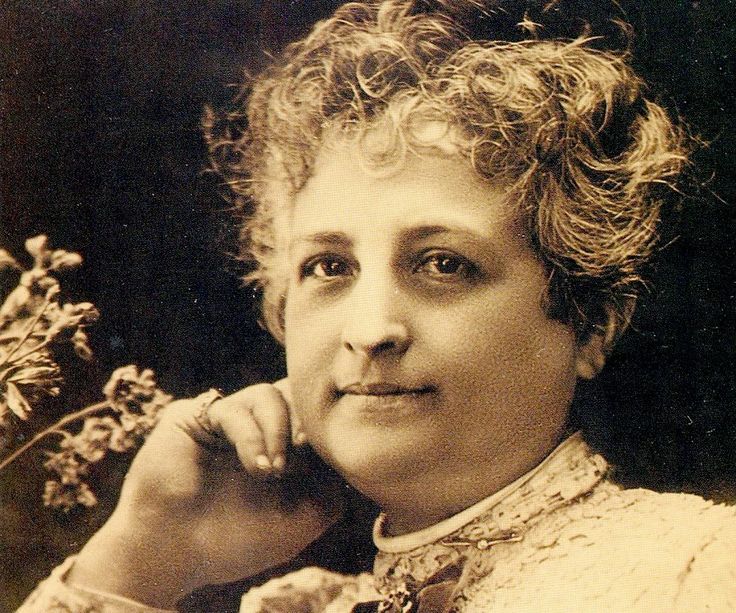
About Teresa Carreño:
“Teresa Carreño (1853-1917) was a celebrated Venezuelan pianist who was a player of great power and spirit, known to her public as a ‘Valkyrie of the piano.’
Born into a musical family, Carreño’s talent was recognized at an early age. She was first taught piano by her father, Manuel Antonio Carreño. In 1862, her family emigrated to New York City. The young girl took a handful of lessons from Louis Moreau Gottschalk. That year, she made her debut at Irving Hall at the age of 8. In 1863, Carreño performed for Abraham Lincoln at the White House.
In 1866, Carreño moved to Europe. She took lessons from Georges Mathias (a pupil of Frédéric Chopin) and from Anton Rubinstein. Carreño made her debut while touring as an opera singer in 1876. While on tour, Franz Liszt offered her lessons, but she declined. Carreño did not return to Venezuela until 1885, and only for a short period. In 1889, she returned to Europe for more touring, eventually settling in Berlin. She mounted two world tours in the early years of the twentieth century, until her health gradually deteriorated.
Carreño died on June 12, 1917 in her apartment in New York City. The Teresa Carreño Cultural Complex in Caracas is named after her, as is a crater on Venus. The Teresa Carreño Cultural Complex would go on to become the Venezuela Symphony Orchestra’s main performance hall. On one of its floors there is the Teresa Carreño piano, recovered by Rosario Marciano, an outstanding Venezuelan pianist who greatly admired Carreño’s works, while she was assigned to the Venezuelan Embassy in Austria as Secretary of Culture.”
– Steinway & Sons
Leave a Reply