


Performance: Orquesta Filarmónica de la Ciudad de México, conducted by Enrique Bátiz
About Janitzio:
The symphonic poem Janitzio by 20th-century Mexican composer Silvestre Revueltas is named after and depicts the island of Janitzio in Lake Pátzcuaro, Michoacan. The small island, once heavily dependent on fishing, is now a popular tourist destination. The musicologist Roberto Kolb-Neuhaus describes, in his 2023 book Silvestre Revueltas, how the piece conveys ideas of the Mexican common people and the oppressed through satire:
“If one score, in particular, has been historicized as a prominent example of Revueltas’ presumed Mexicanist nationalism, it is his symphonic poem Janitzio, named after the tourist attraction, already popular at the time, in the state of Michoacán. The composer, however, accompanied the premiere with a description that satirically undermines this reception, describing the lake surrounding the touristy island as “ugly” and ironically describing his contribution as a further example of “postcard” music in an effort to “promote tourism.” Irony and satire are, in fact, also present in the music from the outstart: an intentionally clumsy pastiche accumulation of folkloric music referents is sabotaged through distortions of each referent. Nationalist “postcard” music is further undermined through Revueltas’ usual means: an aggressive, metrically, and harmonically incongruent juxtaposition of musicalized street insults, foregrounding the voice of the non-picturesque Lumpenproletariat. As also typical in Revueltas’ early works, the angry anti-nationalist stance is counteracted by slow movements lacking satirical intent and seeking ways to embody the voice of the oppressed through deeply moving polyphonic constructs drawn from the soundscape of the streets. Here it is a “Lento espressivo (molto sostenuto e cantabile)” that articulates a highly expressive counterpoint of two melodies created by Revueltas, which both freely recall pregón (street cry) gestures, rather than folkloric referents.”
– Roberto Kolb-Neuhaus ‘Janitzio (1933/1936)’, Silvestre Revueltas: Sounds of a Political Passion (https://doi.org/10.1093/oso/9780199751488.003.0012)
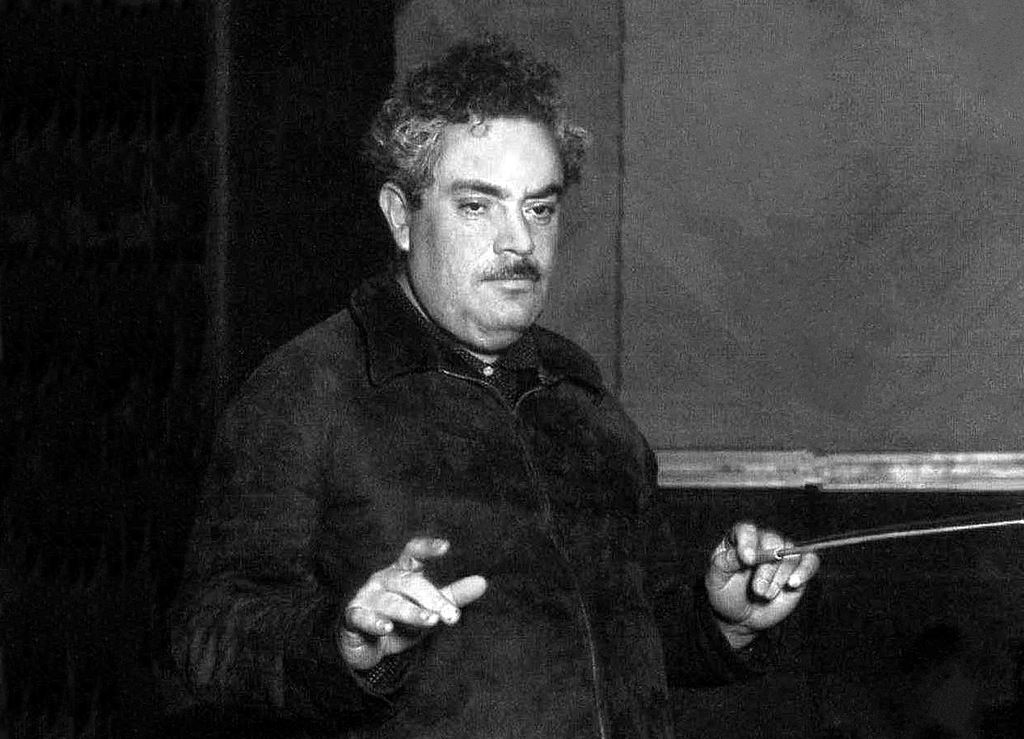
About Silvestre Revueltas:
“Silvestre Revueltas was born in Santiago Papasquiaro, Durango, in 1899. A child prodigy, Revueltas began studying violin at eight years old and entered the Juárez Institute in Durango when he was twelve. In 1916, he left his home in Mexico to study composition and violin at St Edward College in Austin, Texas. Revueltas continued his studies at the Chicago Musical College with Borowski and Sametini. After a brief hiatus in Mexico, he returned to Chicago in 1922 to complete a four-year violin course under Kochanski and Ševčik.
Revueltas began his professional career in the US playing violin in a theater orchestra in San Antonio, Texas, and conducting an orchestra in Mobile, Alabama. In 1929, Carlos Chávez invited Revueltas to be the assistant conductor at the Orquesta Sinfónica de México, where he remained until 1935. During this time, Revueltas was very active as a composer and teacher; he wrote six pieces for the orchestra and taught composition and violin at the conservatory. In 1936, Revueltas shifted his focus to film music. The next year he traveled to Europe and became involved in the Socialist struggle against the Fascists during the Spanish Civil War. While the last ten years of his life were extremely productive, Revueltas’s long battle with alcoholism caught up to him in 1939 and he was admitted to a mental health clinic. The following year he passed away in Mexico City.
Revueltas’s compositions are known for their colorful orchestration and distinctive use of rhythm. He frequently incorporated hemiolas and septuple or quintuple meters and many of his works suggest folk derivations without actually quoting Mexican folk songs. These distinctive stylistic features can be heard in Sensemayá, one of his most famous pieces.”
– Sphinx Music Organization
Leave a Reply