
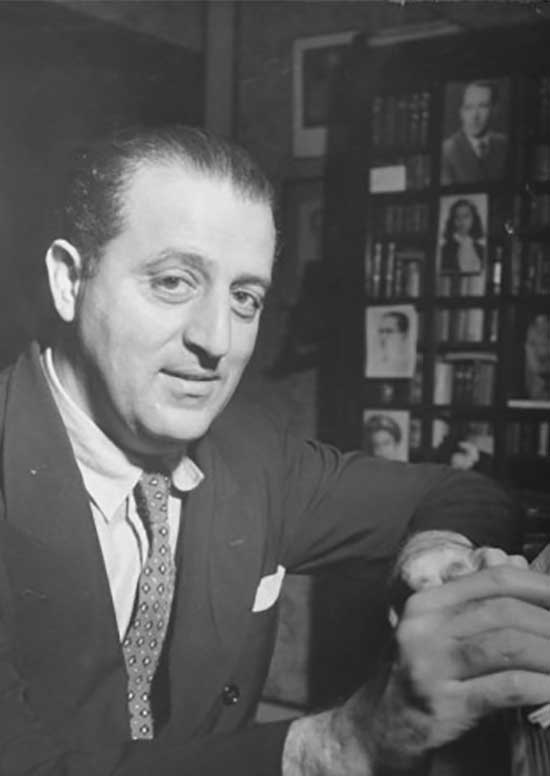


Performance: Arthur Moreira Lima, piano
About Doze Valsas de Esquina:
“The 12 Street Corner Waltzes, composed between 1938 to 1943, are improvisatory in
nature and conjure up instruments that were used on the streets of São Paulo, such as the acoustic guitar, the seven-string acoustic guitar, and the flute. Mignone was an active street musician in his youth, and he performed and arranged music by celebrated composers of Brazilian popular music. He used a pseudonym, Chico Bororó, to keep his erudite career apart from his side endeavors as a street musician. He and his friends played romantic urban popular songs on the street corners of São Paulo, often near theaters and bars. Francisco Mignone himself said that young male musicians would gather to perform serenades to young ladies, dreaming one day that they could be their lovers. The Brazilian serenade is melancholic and romantic, most of the time expressing a platonic love. Years later, these experiences would provide inspiration for the composition of the 12 Street Corner Waltzes. It is interesting to note that similarities exist among the waltzes in phrase structure, harmonic progressions, and melodic outlines, lending a sense of unity to this work as a whole. The prospective performer should be aware that these pieces are at times extremely difficult to execute. This is largely due to polyphonic layers, often with melodic and complicated figuration, moving independently. While waltz no. 5 is more approachable, waltz no. 12 is the most demanding of this set.”
– Medeiros, Pedro. “The 12 Valsas de Esquina (12 Street Corner Waltzes)
by Francisco Mignone” Ball State University ProQuest Dissertations & Theses, 3/2023.
About Francisco Mignone:
“Francisco Mignone was a Brazilian nationalist composer. He was born in 1897 into a
family of musicians who had immigrated from Italy to São Paulo, a city in Brazil where many
European immigrants settled. His father played the flute and the piano and introduced both of
these instruments to Mignone. In 1917, Mignone graduated from the São Paulo Conservatory,
where he studied flute, piano, and composition. By 1920, Mignone had composed and conducted many orchestral pieces; that same year he moved to Italy to study at the Milan Conservatory.
While in Europe, he composed a few operas and ballets that were performed in Brazil and were
well-accepted by critics. In 1929, he returned to São Paulo and was appointed as the harmony
teacher at São Paulo Conservatory. In 1933, he took a major step in his career when he moved to Rio de Janeiro, which was the capital of Brazil at the time. There, he taught conducting at the Escola Nacional de Música. A few years later he toured Europe, conducting European orchestras as they performed his music. In 1942, he visited the United States and conducted the NBC and CBS orchestras in concerts of his music. During this same trip, the League of Composers performed selections of his music in New York.”
“Most of Mignone’s solo piano works feature idiomatic writing, lush harmonies, and
brilliant passages in the Romantic style. In his first period, from approximately 1917 to 1929, he
wrote very few piano works, dedicating most of his composition time to other musical genres,
such as opera and orchestral works. It was during his second period, 1929 to 1960, that Mignone flourished as a piano composer, creating many nationalistic works, including the 12 Street Corner Waltzes. The last compositional period, from 1960 to the end of his life in 1986, was marked by the exploration of Western compositional trends. Mignone wrote four significant
piano sonatas that did not feature nationalistic characteristics but were composed in standard
sonata form with contemporary sonorities such as harmonic extensions, quartal harmonies, and tonal clusters.”
– Medeiros, Pedro. “The 12 Valsas de Esquina (12 Street Corner Waltzes)
by Francisco Mignone” Ball State University ProQuest Dissertations & Theses, 3/2023.
Leave a Reply