


Performance: Detroit Symphony Orchestra; Joseph Young, conductor; George Shirley, narrator; Janice Chandler-Eteme, soprano; Olivia Johnson, mezzo soprano; Issachah Savage, tenor; 40th Anniversary Celebration Choir
About Scenes from the Life of a Martyr:
“‘Like everyone else able to hold a pen, I have been asked to do a large work on Martin Luther King.’ So wrote composer Undine Smith Moore in 1978. The work turned out to be ‘Scenes from the Life of a Martyr,’ Moore’s most ambitious work. She wrote the work as a tribute both to Dr. King, and ‘to the ordinary men and woman who struggle against the tragedies of human existence.’ (Moore, who lived from 1904 to 1989, was a composer and teacher whose students included jazz great Dr. Billy Taylor). The piece is in four sections, covering different periods in Dr. King’s life. First, childhood, featuring spirituals and a text from Stephen Spender: ‘What is precious is never to forget.’ Part Two covers Dr. King’s early manhood, with text taken from the Song of Solomon. The third section, covering his rise to fame, begins prophetically: ‘The hour of anointment is at hand.’ And the fourth and final section: ‘Evil times came upon him.’”
– NPR
“This epic work is is a musical depiction of Martin Luther King, Jr.’s life: from birth, to adolescence, to adulthood, to his marriage to Coretta Scott, to his missionary work, to his assassination and finally to his afterlife. Scored for SATB Chorus, four vocal soloists, narrator, and orchestra, the 40-minute piece consists of 16 movements…. Undine Moore became the first African American woman composer to earn a Pulitzer Prize nomination for the original orchestra score. Moore drew the text from various sources, including the Bible and spiritual songs.
While the piece does not follow any particular form or structure, the musical styles change from beginning to end, corresponding to King’s growth. The piece starts with settings of spirituals (representing his mother singing to him), very straightforward and accessible. Once the piece moves into King’s adulthood, styles change and become more individualistic, more personal for the composer, and more idiomatic of 20th century styles, particularly in terms of its harmonic vocabulary and orchestration.”
About Undine Smith Moore:
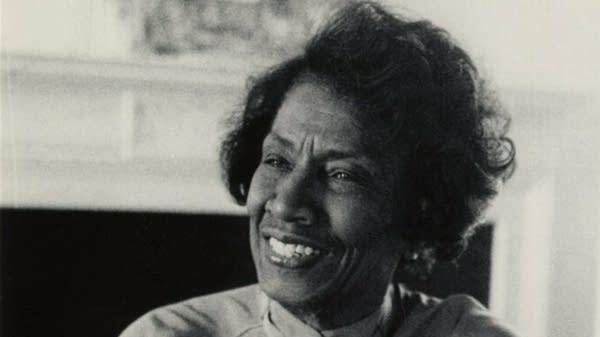
“Born on August 25, 1904, in Jarratt, VA, the ‘Dean of Black Women Composers’ Undine Smith Moore was an African-American music educator and composer. She was the granddaughter of slaves and took to the piano at a young age. Her post-secondary education began at historically Black college Fisk University where she studied piano, organ, and music theory, earning her Bachelor of Arts degree in 1926. From there, she obtained her Master of Arts at Columbia University Teachers College in 1931. Additionally, Moore studied at the Juilliard, Manhattan, and Eastman Schools of Music, and was notably the first Fisk graduate to receive a scholarship to Juilliard.
Moore’s career started in North Carolina public schools as a supervisor of music programs. She later went on to Virginia State College where she held the position of professor of music theory and composition for more than four decades. During her time at Virginia State, she co-founded and co-directed the university’s Black Music Center. The mission of this center was to promote appreciation of music by black individuals in America through performance and study of music. Throughout her lifetime, Moore received honors and awards for her musical accomplishments, such as the Virginia Governor’s Award in the Arts, National Association of Negro Musicians Distinguished Achievement Award, Candace Award from the National Coalition of 100 Black Women, and honorary doctorates from Virginia State College and Indiana University. Despite these prestigious recognitions for her compositions, Moore always thought of herself as an educator first, calling herself ‘a teacher who composes, rather than a composer who teaches.’
Towards the end of Moore’s life, she and Altona Trent Jones traveled to Africa from 1971-72. Moore experienced an overwhelming amount of joy because for once she did not feel like a minority. She was impressed by the way the arts were integrated into daily life. However, Moore also experienced anger when she visited the slave-trading centers and saw the way the men, women, and families were being treated.
While Moore retired from teaching, she never stopped composing. In fact, the works she created during retirement are regarded as some of her best. Moore suffered a stroke and passed away in 1989. At the funeral service, many of her spiritual arrangements were performed. Adolphus Hailstork set the Biblical text I will Lift Up Mine Eyes as part of a cantata in her memory.
Moore’s arranging, composing, and teaching was influenced heavily by her culture and background. For example, Moore composed using melodies that her mother and father had learned from their parents. This inspiration is reflected in the Afro-American Suite and the oratorio Scenes from the Life of a Martyr. Scenes from the Life of a Martyr is a cantata for a chorus, narrator, soloist, and orchestra. Moore dedicated it to Martin Luther King Jr., and it was nominated for a Pulitzer Prize. In an interview, Moore said ‘from our earliest remembrances we are influenced by the things we hear when we do not even know what we are hearing, by the things we see when we don’t know what we are seeing.’ In African culture, spirituals are viewed as conversations between the past, present, and future. They link African culture to African-American individuals and offer history and hope when struggling. Moore’s most famous arrangements of spirituals include Striving after God; Mother to Son; Hail Warrior; and Daniel, Daniel, Servant of the Lord.”
Leave a Reply