


Performance: Shizue Sano, piano
About Fireflies, Op. 15, No. 4:
“Amy Beach’s Four Sketches, Op. 15, was published in 1892. Each piece in the set is headed by a quotation from a French poet: two from Alphonse de Lamartine, and two from Victor Hugo. An element of the natural world is here as well: three of the four quotations use nature images.
The first piece, ‘In Autumn,’ is a dancelike work in a minor mode, suggesting the nostalgia and melancholy of the fall season. The second piece, ‘Phantoms,’ takes its name from the title of the poem Beach quotes. The quotation clarifies the ghostly reference with a further metaphor about the fleeting life of flowers. The music is a delicate waltz with, again, a nostalgic tone. Its ending is sudden, almost abrupt, further expressing the idea of ephemerality.
The third piece, ‘Dreaming,’ arises from the depths of the piano with a soft rocking figure. One can easily imagine its lyrical melody as ‘speaking from the depths of a dream,’ as its poetic quotation describes.
Beach rounds out the set with the virtuosic ‘Fire-Flies.’ Its accompanying quotation returns to the theme of impermanence. A firefly lives only for a season, but shines brightly while doing so. Similarly, this piece packs a lot of brilliance into its short duration.
Fire-Flies, Op. 15, No. 4
‘Naître avec le printemps, mourir avec les roses‘
‘To be born with the spring, to die with the roses‘
From Le papillon by Alphonse de Lamartine”
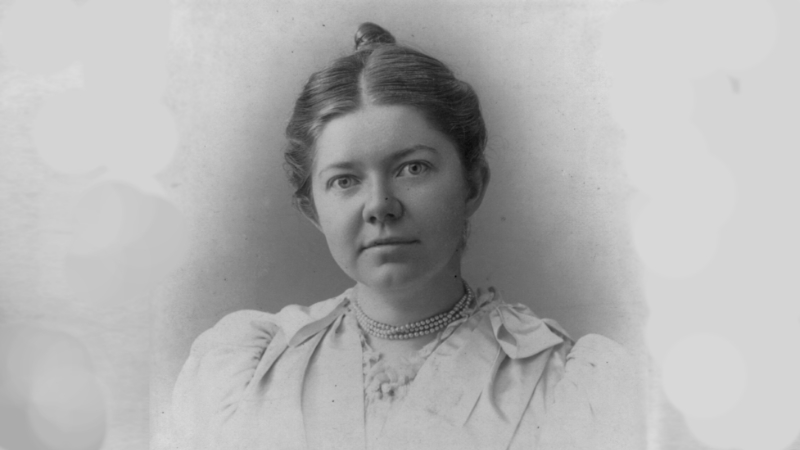
About Amy Beach:
“Well known in her lifetime but only rediscovered in the past few decades, Amy Beach was one of the first American composers – male or female – to gain international acclaim. Largely self-taught, she published more than 300 pieces of music in her lifetime and was known as ‘the dean of American women composers.’
Amy Marcy Cheney was born on September 5, 1867 to a well-to-do family in Henniker, New Hampshire. A musical prodigy from childhood, she sang in harmony by age two, wrote her first waltzes by age four, and played piano pieces by Beethoven, Handel, and Chopin (along with her own compositions!) by age seven. Her family moved to Boston in 1875 so that she could study piano and composition with expert instructors. At 16, Beach gave her first concert at the Boston Music Hall and at 18, she debuted with the Boston Symphony Orchestra as a featured piano soloist in a performance of Chopin’s Concerto in F Minor. However, Beach’s mother (herself a talented amateur pianist and singer) refused to allow Beach to pursue a career as a touring pianist due to the prevailing stigma against upper-class women performing publicly.
That same year, Beach married Henry H. A. Beach, a prominent physician. Like her mother, Beach’s husband disapproved of his wife touring as a pianist. Instead, Beach limited her concerts to two per year (donating the proceeds to charity) and turned her focus from piano to composition, a pursuit that her husband did encourage. Most aspiring composers undertook private instruction in Europe, but women were considered unfit for such training in that era. After only one year of formal lessons in Boston, Beach created her own program of study, methodically analyzing musical scores. In one interview she remarked: ‘I copied and memorized whole scores of symphonies. It was like a medical student’s dissection.’
Beach’s first major success as a composer came in 1892, when Boston’s Handel and Haydn Society performed her Mass in E-flat major. This milestone made her the first American woman recognized as a composer of large-scale orchestral works. Beach’s reputation grew and she received commissions for choral and vocal pieces. Later that year, the Symphony Society of New York debuted her concert aria, Eilende Wolken, op. 18, the first piece by a female composer the orchestra had ever played. She composed Festival Jubilate for the dedication of the Woman’s Building at the World’s Columbian Exposition in Chicago in 1893.
Beach’s noted 1896 Gaelic Symphony blended the styles of Irish folk melodies, Antonin Dvorak’s ‘New World’ Symphony, and other composers. Its performance by the Boston Symphony Orchestra marked the first time a major symphony orchestra played a work composed by an American woman.
By 1911, both Beach’s husband and mother had passed away. Free of their disapproval, the 44-year-old Beach resumed performing and gave recitals throughout Europe for three years. She returned to the US in 1914 and continued to pursue both her passions, performing in the winters and composing in the summers. She split her time between Cape Cod, New York City, and the MacDowell artists’ residency in New Hampshire.
While she never formally taught music, Beach often lectured and published on musical education and composed teaching pieces. She worked with music teachers in New Hampshire to establish children’s ‘Beach Clubs’ to foster their enjoyment of music. She also co-founded the Society of American Women Composers and served as the organization’s first president.
Beach died on December 27, 1944 in New York City. As a result of advocacy by Beach enthusiasts, her name was added to the Edward A. Hatch Memorial Shell (an outdoor concert venue at the Charles River Esplanade) on July 8, 2000, making her the first and only female composer among the 88 adorning the Shell.”
Leave a Reply